
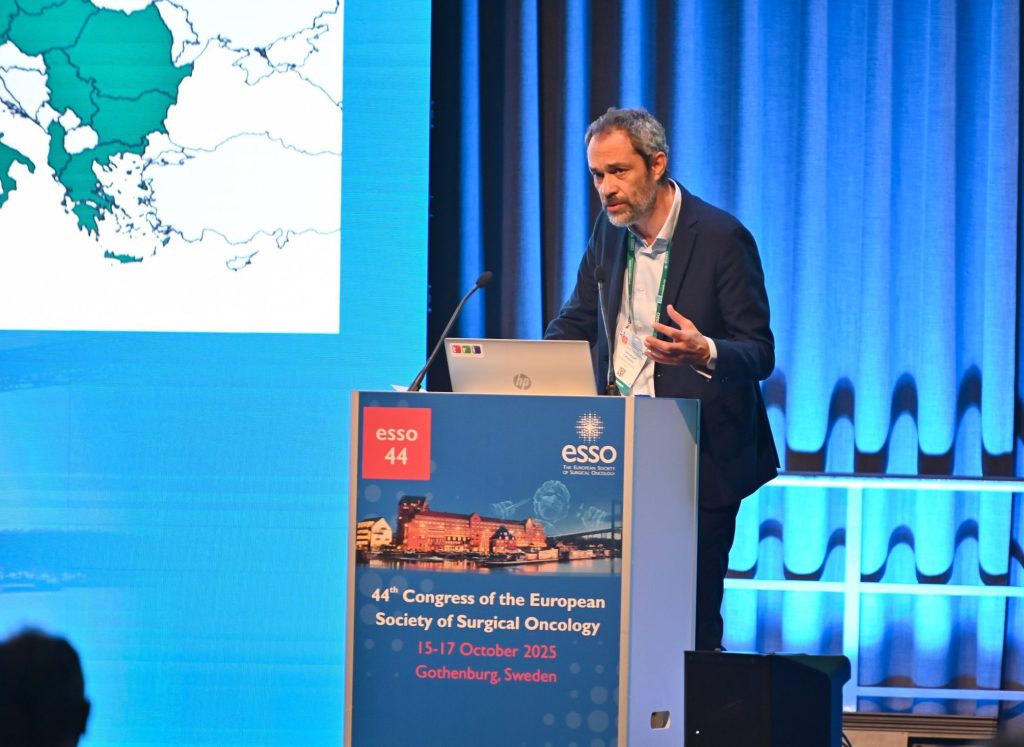
Recent exchanges with the European Commission reaffirmed that the recognition of medical specialties remains the prerogative of individual Member States. While this limits the possibility of EU-level harmonisation, it highlights the critical role of ESSO in coordinating expertise, supporting national efforts and ensuring consistency in cancer surgery training and practice across Europe.
The 2025 ESSO Survey involved national surgical oncology societies and Young ESSO national representatives from 27 countries. Almost two-thirds reported the presence of a national surgical oncology society, showing progress since 2018, yet recognition of Surgical Oncology as an independent specialty remains limited. Most cancer surgery is still delivered within general surgery frameworks, and centralisation — while advancing — continues to vary significantly among countries.
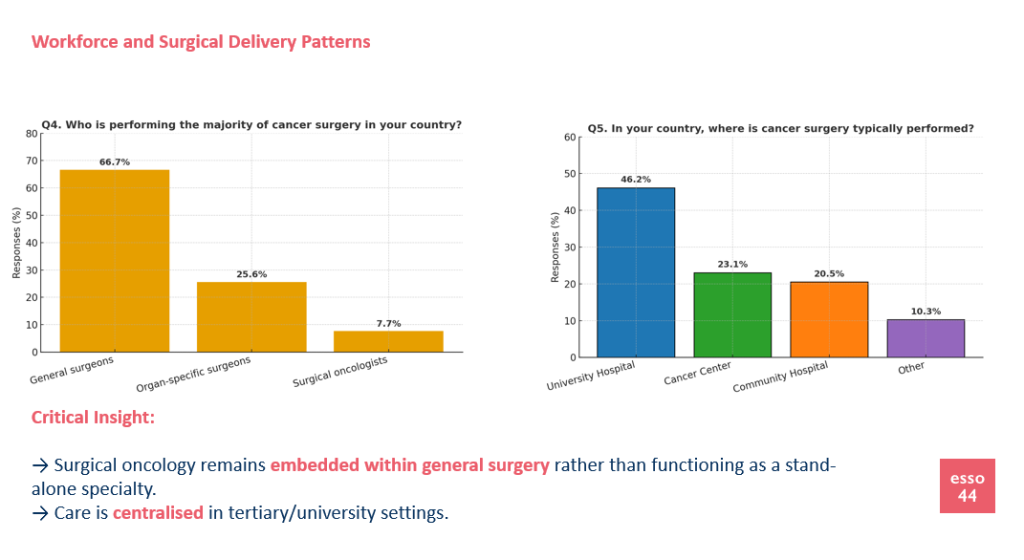
Education and training remain the most pressing challenges. Respondents consistently emphasised gaps in structured training pathways, national curricula and accredited programmes. Barriers such as limited political engagement, intra-professional resistance and fragmented decision-making continue to hinder formal recognition and institutional adoption of surgical oncology competencies.
Despite these challenges, national initiatives are emerging. Efforts include the creation of training programmes, formation of national societies, development of guidelines and advocacy directed at government bodies. These actions reflect a bottom-up dynamic led by clinicians committed to improving cancer surgery standards.
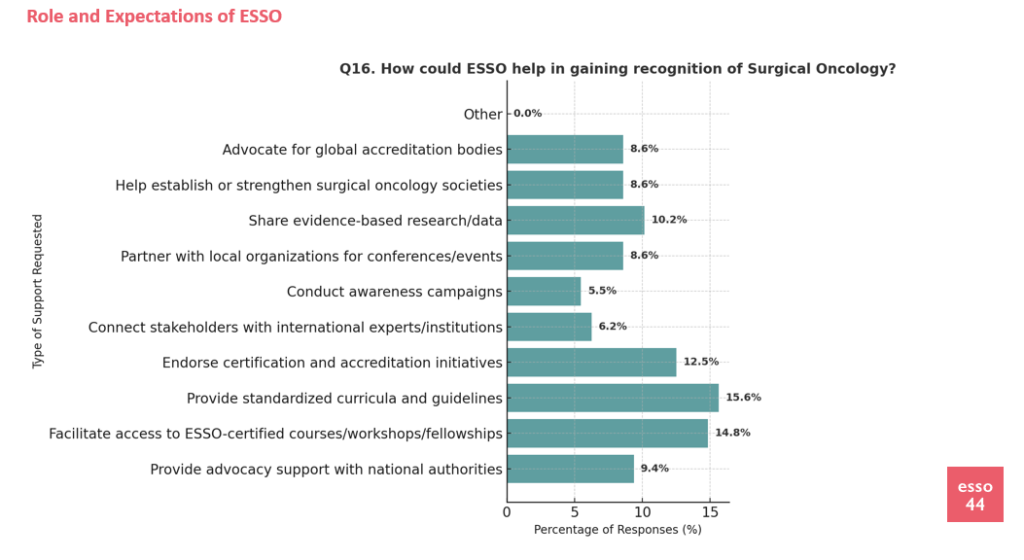
A clear message from respondents concerns the role they expect ESSO to play. ESSO is increasingly regarded as the organisation responsible for defining standards, providing structured curricula, endorsing training programmes and promoting certification frameworks. Awareness of ESSO’s advocacy activities is high, while the next strategic objective will be ensuring meaningful integration of the ESSO Core Curriculum into national training systems. Awareness of the European Board Exam and UEMS certification is also improving, although wider national endorsement will be essential for stronger uptake.
The findings presented at ESSO44 confirm that while progress is being made, Surgical Oncology in Europe remains heterogeneous and inconsistently recognised. Strengthening structured training, expanding accreditation, developing national societies and engaging policy makers will be key to ensuring that patients across Europe receive the highest standard of cancer surgery.
ESSO will continue to lead these efforts by supporting national stakeholders, promoting professional excellence and advancing the recognition of Surgical Oncology as a distinct discipline across Europe.
Submitted by Giuseppe Catanuto
ESSO Board Member